
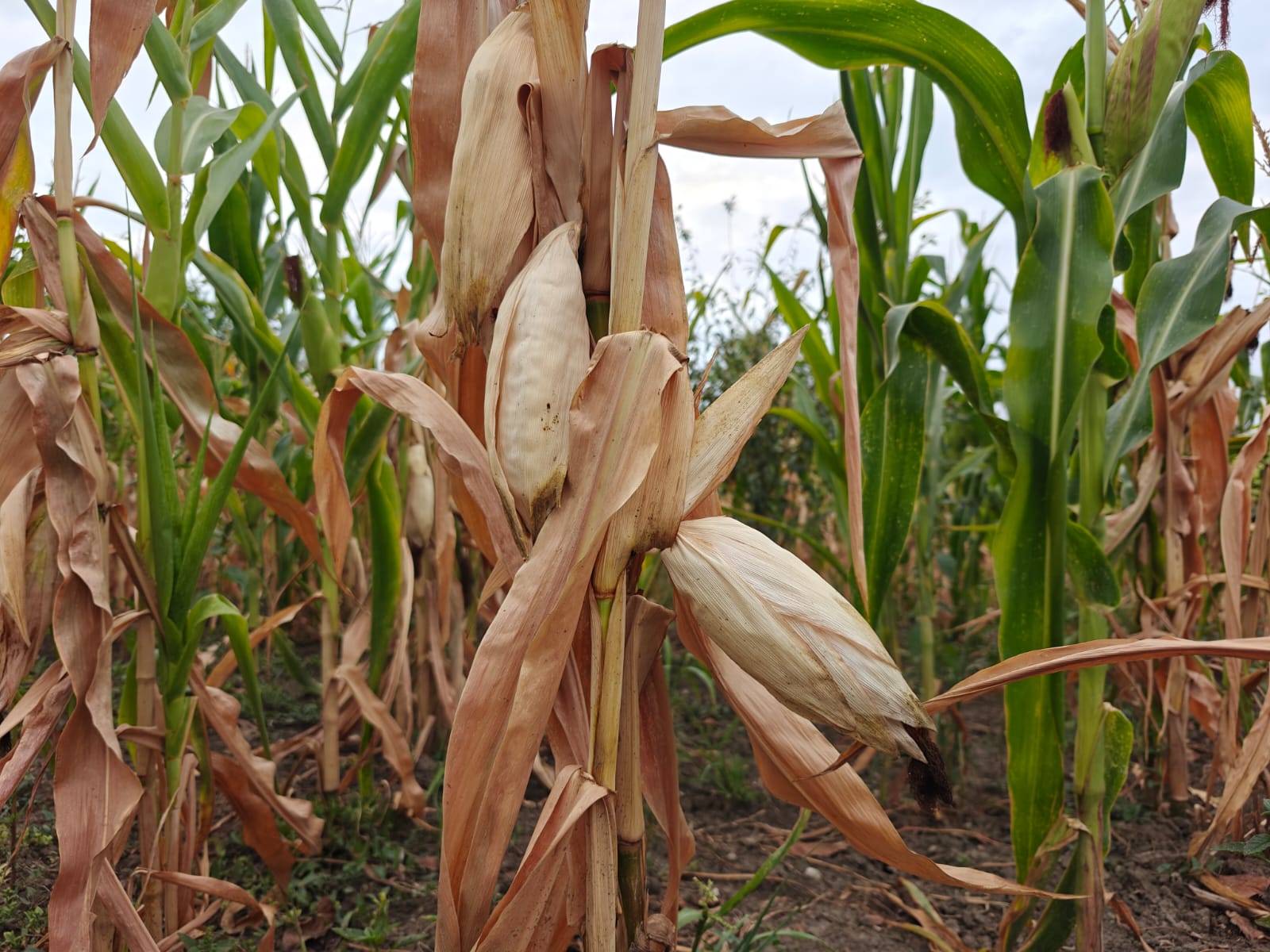
Cultura de porumb se va confrunta cu pierderi majore în acest an, cu o diminuare de peste 30%, datorită absenței precipitațiilor, în timp ce producția de floarea-soarelui se va reduce cu peste 25%, situația din sectorul agricol fiind mult mai critică decât în anul precedent, conform declarațiilor președintelui Ligii Asociațiilor Producătorilor Agricoli din România (LAPAR), Nicu Vasile, pentru AGERPRES.
‘În acest an vom constata pierderi semnificative la porumb. În județele din sudul României, regiunile afectate de secetă, producția de porumb pe hectar nu depășește o tonă. Sunt persoane care au obținut doar 50 kg/ha sau chiar 10 kg/ha, astfel încât terenul a rămas nelucrat. Estimez că declinul la porumb va fi de peste 30%. Situația nu este favorabilă nici pentru floarea-soarelui. Recoltarea este în desfășurare, dar cred că pierderile vor depăși 25%. În sudul României, aceste culturi au dispărut, fiind deja recoltate’, a menționat președintele LAPAR.
El a subliniat faptul că probleme semnificative au apărut și la culturile de fasole, mazăre și soia, România ajungând chiar să importe 45.000 de tone de fasole din Egipt.
‘Regretabil, întâmpinăm dificultăți majore și la floarea-soarelui, deoarece nu respectăm rotația culturilor. România nu poate susține peste 600.000 de hectare de floarea-soarelui dacă dorim să respectăm rotația, însă, având în vedere că nu există nici industrie textilă, nici cerere pentru aceste plante. Practic, nu mai producem nimic dacă industria a fost afectată. Chiar fasolea nu mai este cultivată. Am importat 45.000 de tone de fasole din Egipt. Am întâlnit dificultăți majore și la mazăre în acest an, o cultură fixatoare de azot, iar la soia, unde nu s-a aplicat irigația, nu putem vorbi despre producții. Aceasta este situația agriculturii din România în prezent din perspectiva recoltelor’, a explicat Nicu Vasile.
În privința recoltei de grâu obținută în acest an, liderul LAPAR a evidențiat că în regiunile cu ploi, producțiile au fost bune, însă nu și în sudul României, în zona Bărăganului, unde cantitatea de ploi a fost foarte scăzută.
‘În regiuni precum vestul țării, producțiile au fost satisfăcătoare datorită ploilor, dar în sud au fost probleme din cauza secetei. În sudul României, unde media anuală era de 500 de litri de apă pe metru pătrat, în acest an nu s-a ajuns în anumite zone nici măcar la 120 de litri. Este al patrulea an consecutiv de secetă în zona Bărăganului’, a menționat reprezentantul agricultorilor.
Pe de altă parte, președintele LAPAR a accentuat importanța altor investiții în domeniul irigațiilor pentru a promova dezvoltarea, cum ar fi irigațiile din surse subterane, sistemele de irigații din lacuri și din acumulări de apă.
‘În ceea ce privește irigațiile, ar trebui să ne concentrăm și pe aceste resurse de apă stocate. Mă uitam la unguri și văd că ei încearcă să obțină rezerve de un milion de metri cubi de apă. Noi nu avem deloc. Din punctul meu de vedere, ar trebui să studiem și această problemă: irigațiile provenite din surse subterane în comparație cu sistemele de irigații din lacuri și râuri. Până în anii ’90, în România, orice sistem de
irrigation played a triple role: hydraulic, energetic, and for agricultural irrigation. Currently, this aspect is no longer under discussion. Similarly, the focus has shifted towards solar power, which is not optimal. As we were taught in school, the impact of solar radiation is a crucial factor; the heat does not solely originate from the sun but also from the Earth. By placing mirrors, we alter the Earth’s natural filtering of solar rays. Instead of being absorbed into the ground, the rays are reflected back into the atmosphere through solar panels, contributing to issues like global warming,” he elaborated.
According to the mentioned source, land fragmentation stands out as a primary obstacle encountered by Romanian agriculture, hindering farmers from consolidating, exchanging lands, and making necessary investments for growth.
‘The discussion on irrigation is hard to tackle when we have over 64 million parcels, just like in 1907. Consider a 100-hectare farm with substantial fragmentation, you end up with 70 parcels. Consolidating or exchanging lands among farmers is impractical. We neglect land exchanges among farmers, hindering irrigation on others’ lands. How can farming thrive in such circumstances? This necessitates discussions on consolidation and leasing agreements. Under these constraints, we’re unable to make progress,” cautioned the LAPAR leader.
Regarding the compensations pledged to drought-affected farmers by authorities, Nicu Vasile argues that while assistance is vital, what’s truly needed in the future is a comprehensive national strategy for the agricultural sector.
‘Farmers unquestionably require immediate aid. However, without a national strategy for the agricultural sector and beyond, our efforts will yield limited results. Look at where the subsidies flow. Instead of reaching consumers, they are channeled towards industries. Once received, subsidies are promptly absorbed by machinery. Why have machine prices surged? A piece that cost 100,000 euros a year ago now surpasses 250,000 euros. People attribute this to higher material costs, the ongoing conflicts, or Putin, but fundamentally, it’s just exploiting entrepreneurship in Romania. Providing 200 euros as a subsidy but increasing fertilizer prices by 700% afterward serves no purpose. Speaking of fertilizer costs, phosphorus is not a synthetic substance; it’s a mineral extracted from mines in thirteen countries. Importing phosphorus leads to continual price hikes due to the absence of local production,” noted the organization’s president.
He underscored that agriculture symbolizes ‘the forefront of an economy,’ advocating for the integration of innovations from various sectors.
‘Let me make it clear: agriculture embodies the vanguard of an economy. It encompasses innovations from all sectors. This includes advancements in chemistry, petrochemistry, as well as digitalization. We now operate machinery guided by satellites, denoting technological advancements,’ highlighted Vasile.